School Books or Bride Price: The Choice That Shapes a Nation’s Economy
April 17, 2026
School Books or Bride Price: The Choice That Shapes a Nation’s Economy
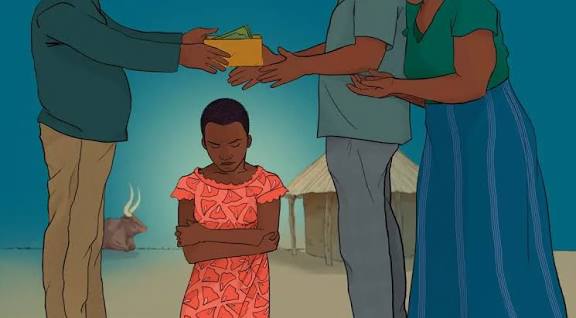
Every year, 12 million girls worldwide are married before they turn 18. For each one, the choice is stark: a seat in a classroom or a price paid for her as a bride. That single choice ripples outward—into health systems, labor markets, and GDP. Child marriage is not just a human rights issue. It is an economic decision nations make, whether they admit it or not.
Not just Africa’s burden
Sub-Saharan Africa has the highest rates—Niger 76%, Central African Republic 61%, Chad 60%. But this is not an “African problem.” South Asia accounts for the largest _number_ of child brides. Bangladesh 51%, Nepal 33%, India 23%. In Latin America, it’s Dominican Republic 36%, Nicaragua 35%, Brazil 26%. In the Middle East, Sudan 34% and Yemen 32%. Even in the US, over 300,000 minors were legally married between 2000–2018.
Child marriage tracks poverty and weak legal systems, not geography. Wherever families lack options and laws have loopholes, girls are traded for bride price instead of handed school books.
Why the bride price wins too often
1. Poverty makes daughters expensive When food is short, a daughter’s school fees, meals, and clothes strain the household. Marriage transfers that cost to a husband and often brings cash, cattle, or land as bride price or dowry. In drought-hit Sahel regions and flood-prone Bangladesh, parents call it “disaster insurance.”
2. Laws say 18, but mean “maybe” Most countries set 18 as the minimum age. Yet 43 US states still allow child marriage with parental or court approval. Across Africa and Asia, 17+ countries let customary or religious law override civil law. A ban with exceptions is not a ban.
3. School is out of reach Distance, fees, unsafe roads, and no toilets for girls push families out of education. A girl out of school is 6 times more likely to be married early. Without a diploma, her economic value is set at the bride price she commands.
4. Honor, fear, and control Communities fear premarital sex or pregnancy will “ruin” a girl and her family’s name. Early marriage is used to control sexuality and secure alliances. That logic appears in villages in Malawi, camps in Syria, and conservative communities in Texas.
5. Conflict speeds up the clock War and displacement spike rates. Families marry daughters hoping a husband offers protection from rape or hunger in camps. Seen in DRC, South Sudan, Yemen, and among Rohingya refugees.
The price nations pay for bride price
1. Health systems break Girls under 15 are 5 times more likely to die in childbirth than women in their 20s. Fistula, anemia, and infant deaths climb. Married girls face higher HIV risk and domestic violence. Hospitals absorb the cost for decades.
2. Education ends, skills never start 98% of child brides drop out. No degree means no skilled job. The World Bank estimates child marriage costs countries up to 1.7% of GDP in lost earnings and productivity. School books build tax bases. Bride price drains them.
3. Poverty compounds Child brides have more children, earlier. They cannot feed, educate, or protect them well. Their daughters face higher odds of marrying young too. One bride price today means three more in 15 years.
4. Lost leadership Married girls are isolated and have no say in household or community decisions. Nations lose half their potential doctors, teachers, entrepreneurs, and lawmakers before they turn 18.
Choosing school books: What actually works
1. End the exceptions. Period. Malawi raised the legal age to 18 in 2017 and banned parental consent. Ethiopia’s legal reforms plus community work cut rates by 20% in a decade. Six US states have now moved to 18 with no loopholes. If the law bends, the practice survives.
2. Make school cheaper than marriage Cash transfers to families who keep girls enrolled, free secondary school, bicycles for transport, and sanitary pads keep girls in class. Zambia’s scholarships + mentorship model cut early marriage by 60% in pilot zones. India’s cycle program did the same. School must cost less than bride price.
3. Give families another asset In Ethiopia’s Berhane Hewan program, families who kept daughters unmarried and in school received a goat after two years. Child marriage fell 90% among participants. Livelihood projects and women’s savings groups remove the economic “need” to sell a daughter.
4. Put chiefs and imams on the side of school books Bans fail without local buy-in. In Senegal, NGO Tostan ran human rights classes in 8,000+ villages. Over 9,000 communities publicly abandoned child marriage and FGM after dialogue. Imams in Niger and chiefs in Ghana now run “school first” campaigns. Norms change from inside.
5. Create girl-only safe spaces Girls’ clubs teach health, money, and how to say no. They give girls allies and adults they can alert when a wedding is planned. This model works in Egypt, Uganda, and Guatemala. A girl with friends and facts resists pressure.
6. Count every girl No birth certificate means no proof of age. Tanzania tied birth registration to clinics and coverage jumped from 13% to 80%. Digital marriage registers help officials block underage unions before they happen.
7. Don’t abandon the already married 12 million new child brides each year join millions already married. They need second-chance schooling, contraception, safe delivery, and job skills. Writing them off means the cycle repeats with their daughters.
The bottom line Every country that tolerates child marriage is choosing bride price over school books. The first pays once. The second pays forever—in taxes, skills, health, and stability.
Africa’s rates are high, but the math is global: when girls stay in school, nations grow. When they’re married off, everyone goes bankrupt a little. The choice is not cultural. It’s economic. And it’s ours to make.


0 Comments