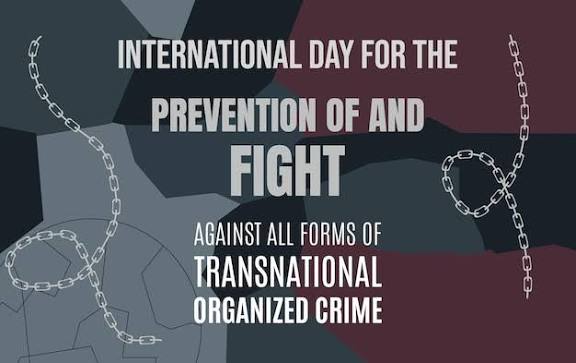
International Day for the Prevention of and Fight against All Forms of Transnational Organized Crime – 15 November
November 15, 2025
International Day for the Prevention of and Fight against All Forms of Transnational Organized Crime – 15 November
The UN General Assembly, through resolution 78/267 (21 Mar 2024), declared 15 November the annual International Day for the Prevention of and Fight against All Forms of Transnational Organized Crime. The day spotlights the threats posed by organized crime—human trafficking, migrant smuggling, drug and firearms trafficking, cybercrime, money‑laundering, and illicit trade in wildlife or cultural property—and rallies governments, civil society, and the private sector to boost global cooperation .
Why It Matters to Africa Africa faces a heavy burden from transnational organized crime. In West Africa (Niger, Libya, Mali) and East Africa (Ethiopia, Somalia), human traffickers and migrant smugglers move victims toward Europe and the Middle East, funding criminal networks and shattering families. Coastal states like Ghana, Nigeria, and Senegal have become transit hubs for cocaine from South America, feeding corruption and violence. Conflict zones in the Sahel, Democratic Republic of Congo, and Central African Republic are awash with illicit firearms that prolong wars and communal clashes.
Cybercrime is another growing scourge—Nigeria’s “419” scams and sophisticated fraud rings in South Africa drain billions of dollars, undermining trust in financial systems. Poaching syndicates in Central Africa target elephants and rhinos, threatening biodiversity and robbing communities of tourism revenue. All these crimes together are estimated to cost Africa over $100 billion a year, roughly 15 % of its GDP .
African Initiatives & Opportunities The UNODC runs regional programmes such as the West Africa Coast Initiative and the Eastern Africa Regional Programme, which strengthen border controls, improve law‑enforcement coordination, and support victims. The African Union’s Continental Strategy on Drug Control and Crime Prevention integrates transnational crime into its peace and security architecture. Regional bodies like ECOWAS (West Africa) and SADC (Southern Africa) operate joint task forces on trafficking and money‑laundering.
Civil‑society groups, including the Global Initiative Against Transnational Organized Crime (GI‑TOC), fund local projects that build community resistance to criminal networks through its Resilience Fund .
How Africa Can Leverage the Day - Raise Public Awareness: Schools, universities, and media can host webinars, debates, and “blue‑light” campaigns to highlight how organized crime stalls development. - Strengthen Legal Frameworks: Align national laws with the UN Convention against Transnational Organized Crime (UNTOC) and its Protocols, and accelerate ratification of the draft Convention on Cybercrime. - Enhance International Collaboration: Use the day to lobby for joint operations (e.g., INTERPOL‑ECOWAS task forces) and for the return of stolen assets. - Support Victims & Survivors: Partner with NGOs to provide shelter, legal aid, and psychosocial support for trafficking survivors and families of law‑enforcement officers killed in the line of duty.
Bottom line: The International Day on 15 November shines a spotlight on transnational organized crime’s corrosive impact on Africa—from destabilizing fragile states to draining resources needed for health, education, and infrastructure. By turning awareness into concrete actions—better laws, stronger cross‑border cooperation, and community empowerment—Africa can turn the tide and protect its path to sustainable development.


0 Comments