Central African Republic Independence Day - August 13th
August 13, 2025
Central African Republic Independence Day - August 13th
Today marks the Independence Day of the Central African Republic (CAR), commemorating the formal granting of independence from France on August 13, 1960. This national holiday is observed annually on August 13th.
WAELE AFRICA Foundation extends warmest congratulations to the people of Central African Republic 🇨🇫 on this momentous anniversary. We wish the nation continued peace, prosperity, and happiness in the years to come.
A History of Independence Day in the Central African Republic
The Central African Republic, nestled in the heart of Africa, boasts a land area of approximately 622,400 square kilometers and a population of 4.6 million. While rich in natural resources like uranium, oil, gold, and diamonds, it is classified by the UN as one of Africa's least developed countries in socio-economic terms.
The CAR's inland location initially shielded it from the early European encounters that shaped coastal Africa. However, the region was profoundly affected by the transatlantic slave trade, which decimated its populations and disrupted established societies. The subsequent "Scramble for Africa" in the late 19th century brought French, German, and Belgian colonial influence, with France ultimately establishing control of the area as Ubangi-Shari in 1894.
French colonial rule in Ubangi-Shari, as in other French African colonies, was marked by harsh labor practices intended to support the cost of maintaining these overseas holdings. Following World War II, the area saw rising nationalism, with Barthelemy Boganda, founder of the pro-independence Social Evolution Movement of Black Africa, becoming a significant figure in the movement for self-determination, being elected to the French Parliament.
Key milestones leading to independence included:
1946: All residents of French Equatorial Africa became French citizens, enabling them to elect local legislatures. 1958: The territory gained self-government within French Equatorial Africa, with Boganda as Prime Minister. This occurred following the establishment of the Fifth French Republic.
December 1, 1958: The assembly declared the birth of the autonomous Central African Republic. August 13, 1960: Ubangi-Shari achieved independence, becoming the Central African Republic. David Dacko, Boganda's nephew, became its first president.
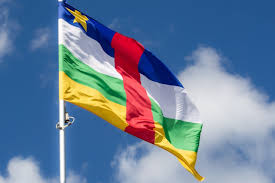
The Central African Republic's flag, adopted on December 1, 1958, reflects its complex history. It combines pan-African colors (red, yellow, and green) with the French tricolor (red, white, and blue). This unique combination symbolizes the country's acceptance of its colonial past while asserting a distinct African identity, referencing Boganda's advocacy for a larger African federation under French protection. The yellow star in the flag's upper right corner signifies this vision.



0 Comments